
The short answer
Because by seven we can see what is coming while the jaw is still growing — and for four out of five children the answer is “nothing yet”.
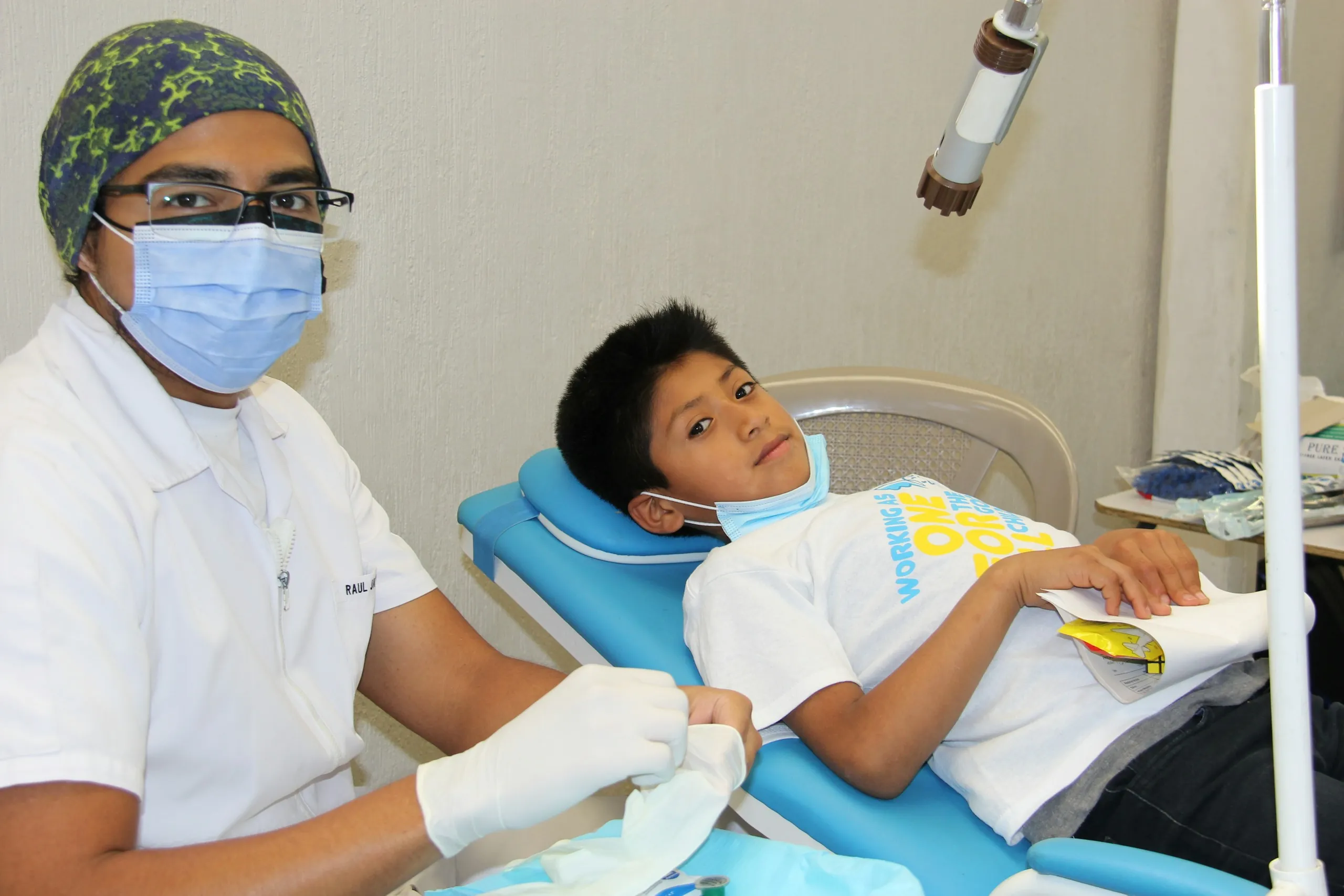
Parents are often surprised when their dentist suggests an orthodontic check for a seven-year-old with a mouth full of baby teeth. Nothing looks wrong. Nothing usually is.
What we are actually looking for
By seven, the first adult molars and often the front teeth are in. That is enough to see the shape of the bite: whether the jaw shifts to one side, whether there is room for the teeth still to come, whether the front teeth stick out far enough to get knocked at the playground.
- A crossbite that makes the jaw close off-centre
- Severe crowding, where adult teeth have nowhere to go
- Front teeth that protrude and are easily injured
- Thumb or tongue habits that are changing the bite
Most of the time, the answer is to wait
Around four out of five children we see at seven need nothing at all. We take photos, answer the questions, and ask you to come back in a year. Those growth checks stay free until the adult teeth arrive.
When early treatment does help
A crossbite is the clearest case. An expander worn for six to nine months while the palate is still two halves is straightforward. The same correction after growth finishes is a much bigger undertaking.
General information about orthodontic treatment, not advice for your mouth. Ask us about your own case at a consultation.